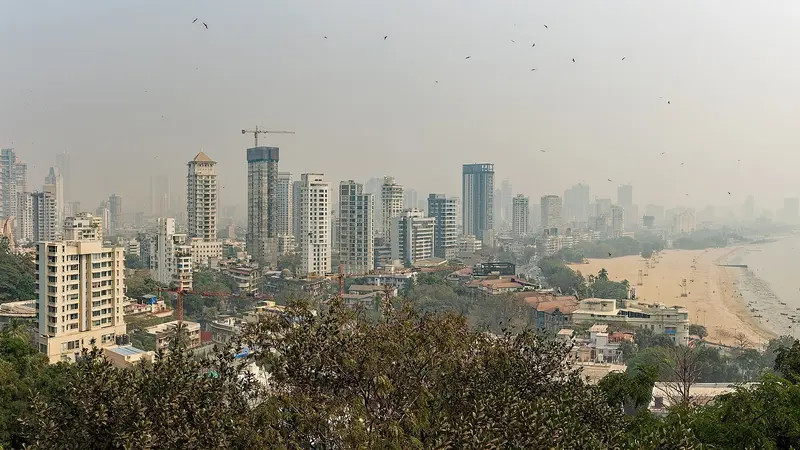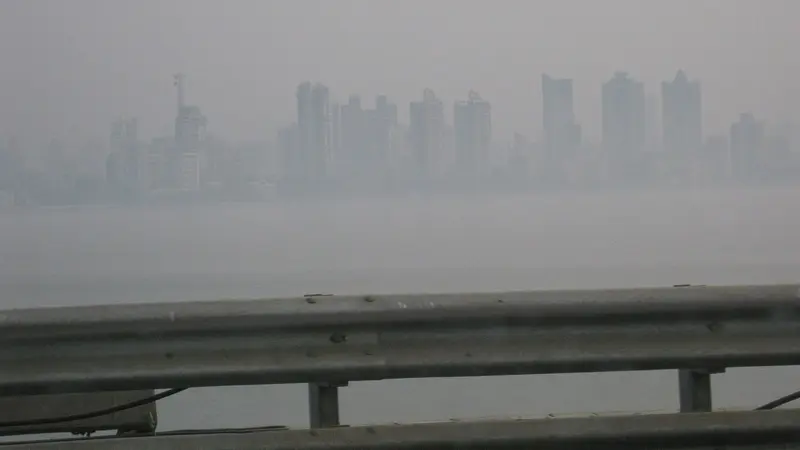
The Brihanmumbai Municipal Corporation (BMC) issued 428 show-cause notices and 44 stop-work notices to construction sites across Mumbai between October 1 and 31 for failing to follow its air pollution mitigation guidelines, as the city heads into the winter months when dust and smog usually peak.
The notices cover both private projects and public infrastructure works. Mumbai currently has about 3,200 active construction sites, according to civic figures reported by the Free Press Journal.
Ghatkopar leads the list
The eastern suburb of Ghatkopar, which falls under the BMC's N ward, received the highest number of show-cause notices at 105. It was followed by:
| Ward | Area | Show-cause notices |
|---|---|---|
| N | Ghatkopar | 105 |
| R-North | Dahisar | 54 |
| T | Mulund | 52 |
| G-South | Worli–Lower Parel | 48 |
Stop-work notices — the stricter action, which halts a project — were highest in K-South (Andheri–Vile Parle East) with nine, followed by R-Central (Borivali) with eight, and D ward (Malabar Hill–Tardeo) and K-North (Jogeshwari East–Marol) with four each.
How the enforcement works
Flying squads in all 26 administrative wards carry out daily inspections, a senior officer from the BMC's Environment department said. A site found violating the norms is first served a show-cause notice and given seven days to comply. If the lapses are still found on a second visit, a stop-work order follows. Work can resume only after the developer or site manager confirms compliance and a follow-up inspection clears the site.
The drive follows directions from the Bombay High Court, which has asked the civic body to step up its air pollution control plan for the city.
What the 28-point guidelines require
The BMC's guidelines for construction sites include:
- Tin or metal sheets at least 35 feet high around projects taller than 70 metres
- Buildings under construction or demolition to be fully covered with green cloth, jute sheets or tarpaulin
- Water fogging during loading and unloading, and sprinklers on debris
- CCTV cameras and sensor-based air quality monitors at sites
- 25-foot barricading at the BMC's own worksites, such as bridges, flyovers and Metro works
Construction and demolition dust is one of the largest contributors to Mumbai's air pollution, which is why on-site mitigation plays a key role in controlling the city's Air Quality Index (AQI), officials said.
Bhandup and BKC under watch
The civic official linked poor air quality in Bhandup to the concentration of public infrastructure projects such as bridges, while in Bandra Kurla Complex (BKC) vehicular congestion was identified as the main source. Deep cleaning of roads has been ordered in both areas.
On Thursday, November 5, Mumbai's overall AQI stood at 107 ("moderate"). The worst readings, according to Central Pollution Control Board data, were recorded at Borivali East (178), Kurla (158), BKC (138), Mazgaon (122) and Worli (121).
Residents can check live AQI readings for their area on the CPCB's national air quality portal and report dust violations at construction sites to their ward office.